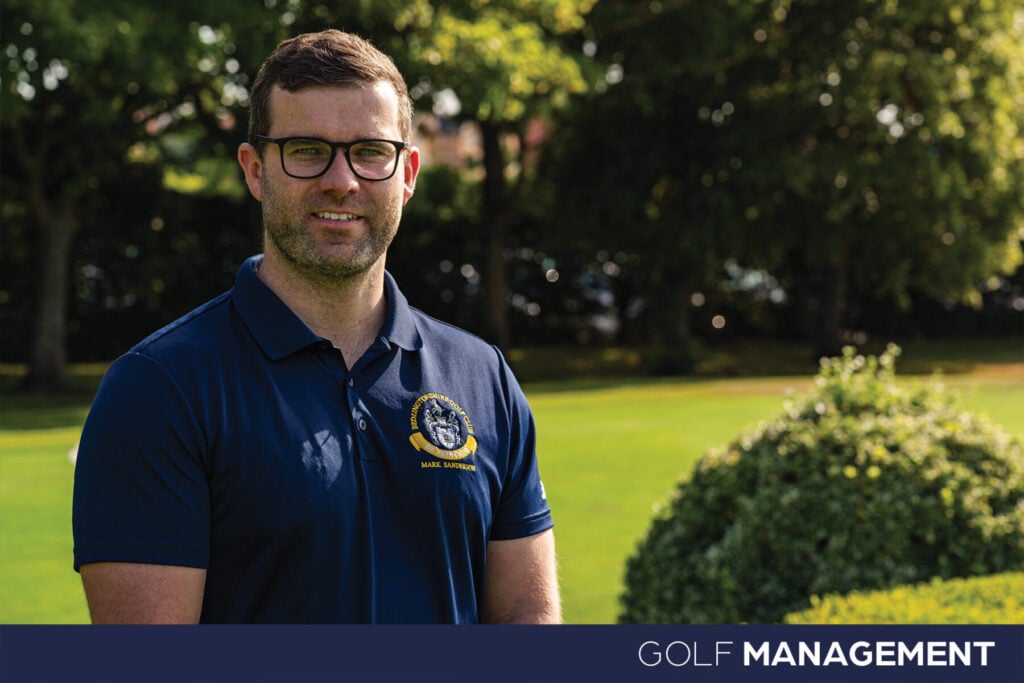

After acquiring an appetite for golf playing pitch-and-putt on a family holiday in Keswick, and then applying substantial natural talent, Mark Sanderson did not waste any time in getting to a low single-figure handicap by his mid-teens.
Nor did the now 34-year-old let the grass grow under his feet before taking the first step on his journey to becoming Bedlingtonshire Golf Club’s club manager – starting full-time work within 24 hours of his final day at school.
“When I collected my grades for my GCSEs from the high school, a teacher said, ‘So what are you going to study when you come back in September?’ He was taken aback when I said, ‘I’m not coming back. I’m starting my job tomorrow.”
At the time he had memberships at both his original club, Longhirst, and Bedlingtonshire, each of which was no more than five miles from home. At 15, Sanderson had also been quick off the mark when he overheard in the Longhirst pro shop that a sudden departure had left them short-staffed for the following morning.
“I knew Graham Chambers, the director of golf, well enough to say, ‘I’ll do it. I haven’t got a clue what I’m doing, but I will help you. I’ll sit in there and do anything you tell me to do’. The shop literally just had a fridge in; we didn’t have anything in the shop because the guy just left. But the shop was built up from there. It was a really good journey.”
The youngster had been on several junior squad trips to The Open, organised by Chambers and Sanderson’s father, but, as skilful as he was, these did not inspire the teenager to dream of a future as a tournament professional. But he did already know he wanted a future in golf.
His sense of responsibility and his diligence meant that Chambers, whose multiple roles at Longhirst included running the junior section, offered Sanderson the chance to take on the role of trainee manager at just 16.
In 2011 he was alerted to head professional Marcus Webb’s need for an assistant professional at Bedlingtonshire, and landed the role, subsequently gaining full PGA qualifications. The next obvious step would have appeared to be to gain experience at assistant’s level before seeking a post as head professional, but he was wary of its limitations.
“The PGA landscape is a little bit different now, but when I qualified you had 300 people per year qualifying, and that is year on year. You often see assistant professionals who never go beyond that point.
“I felt that if I was going to make an impact at a golf club, I was not going to do that from an assistant pro’s position. I felt I should branch out and get into more of an administrative role, long term a manager’s role, and I would always have the PGA qualification to fall back on.”
Sanderson’s admirable work ethic shines through; before starting full-time work at 16, besides his role in the pro shop at Longhirst he also washed cars, and briefly had a paper round, to earn the money for first a scooter and then a car.
But at this point of our interview it is his enthusiasm for being able to achieve his goal of moving the needle at club level that dominates as he describes being involved in the great strides made at Bedlingtonshire during his first four years as club manager.
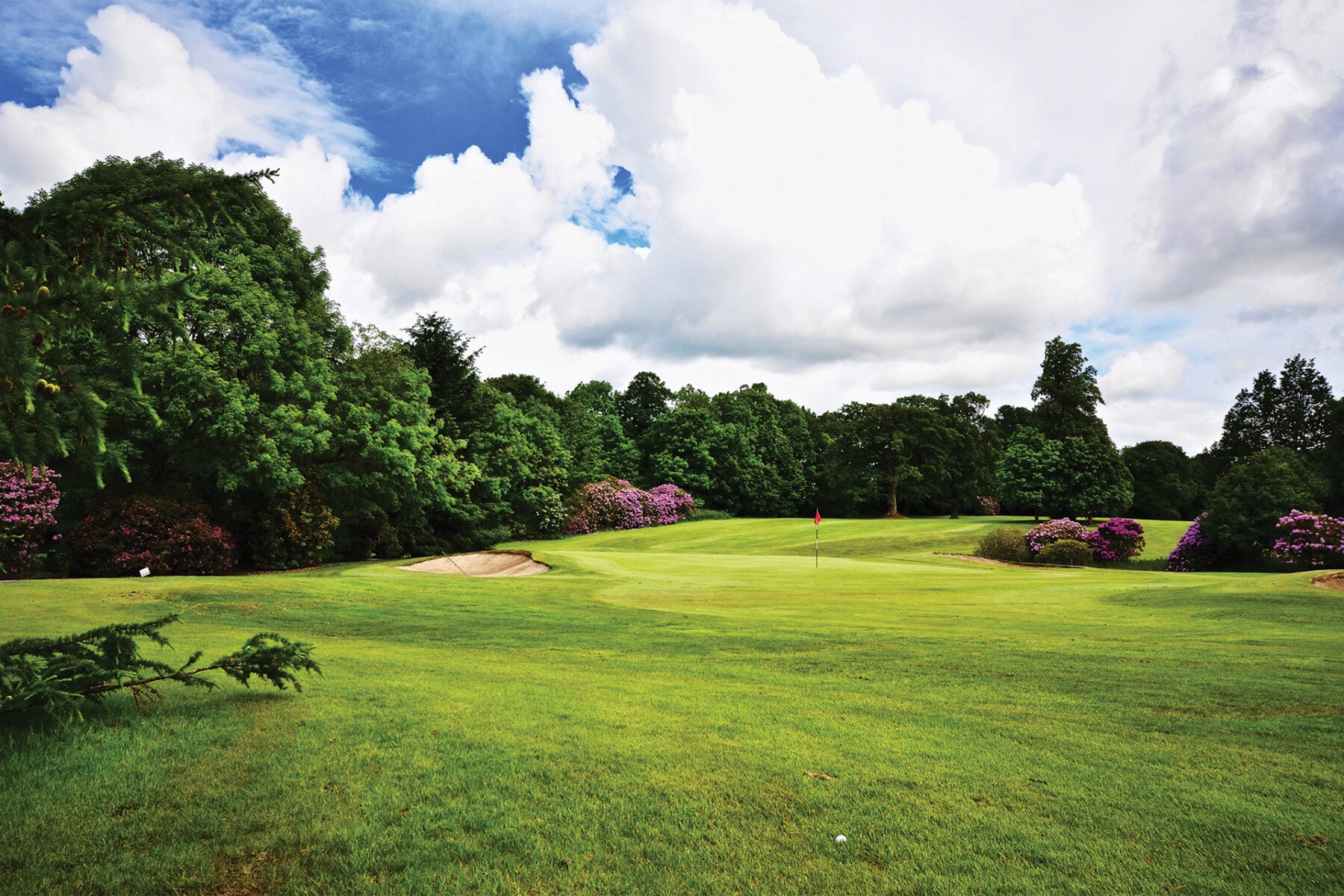
On-course enhancements have involved better tee irrigation, improved drainage, and the laying of recycled strips of 3G football pitches onto paths leading away from tees, particularly those subject to damage during winter, when traffic remains busy.
Off-course the club have built a Trackman iO studio, a putting studio, and changed protocols to make the pro shop Bedlingtonshire’s front of house, so that queries about, for example, memberships or society group bookings do not automatically get deflected towards office management.
“We did a members’ survey, which gave us quite an insight from the members’ perspective, but there was frustration from my side as well, which I shared with the board. That is how we came up with a plan as to how we were going to address certain areas.
“It was simple things, but things which cost a lot of money, like tee irrigation. We saw areas of the greens’ drainage failing – it was 50 years old – and you would have areas of the green that would just pool water a little bit.
“We had to plan effectively so that we could afford it because we are not cash rich. Our membership fee is £825 plus the affiliation fee; we are a very reputable golf course, we host county championships and things like that, and the county enjoy coming here.”
With membership income much lower than at many adjacent clubs, but operating costs very similar, Sanderson says, “it is the surplus which gets really nipped away.” But historical reluctance to embark on projects they felt were unaffordable have been assuaged by the club’s affordable long-term approach to the work.
“The members are seeing the benefits, physical improvements. Some of the tees which were really dry last year are really green now, which is fantastic.”
The proposal to invest £35,000 in the Trackman studio was also met with some initial opposition, but the recalcitrants were quickly won over.
“When they were going in initially it was a case of, ‘why are we spending £35,000 on a swing room when we could have spent that on the course?’, but it was about the revenue coming in over a period of time.
“Our green fee intake for the whole year is about £75,000, so when you compare that to bigger clubs, they are taking in considerably more than clubs similar to ourselves in the North East. They’re driving a lot of commercial and corporate revenue, but we are very focused around the member, so have a very reasonable fee set.
“If we even increase our intake around £25,000 a year through the swing room then that just goes back into the golf course. It has also meant that we have been able to get new pro shop staff, and a new head pro in Jonathan Levey. They teach, they do junior coaching all winter, and the spinoffs from having that studio have been significant, so it was a massive step in the right direction.
“Retails rocketed because of the Trackman studio, and the impact of the putting studio has been phenomenal. We have sold more putters this year than in the previous four years combined.”
Sanderson – who was awarded Fellow Manager status with the PGA in March –says he is indebted to the guidance and encouragement from both Chambers and Webb that helped shape his career.
He runs the junior section, with the help of a lady member, and uses much of his spare time to attend as many of their events as he can, his way of paying forward all the help he got when starting out in golf.
His spare time will shrink considerably come November as he and partner Sarah are expecting their first child. Fatherhood might therefore apply a touch of the brakes to both his love of mountain biking, and to an attempt to play more golf than in recent years.
“I had probably been down to about four rounds for the whole year. I bought some new equipment this year, just to try and get the bug back a little bit. I’ll tell you what I have enjoyed, I have enjoyed playing badly because it’s given me something to practise over the winter, practise in a Trackman bay, get out there in the evening time when there’s no one around.
“I’ve enjoyed the challenge of actually starting to learn golf again.”
Although not as much as he will enjoy learning for the first time the skills of, and experiencing the delights attached to, being a parent. “Aye, this winter is going to be pretty full on, I imagine,” he says, with an unmistakable smile in his voice.