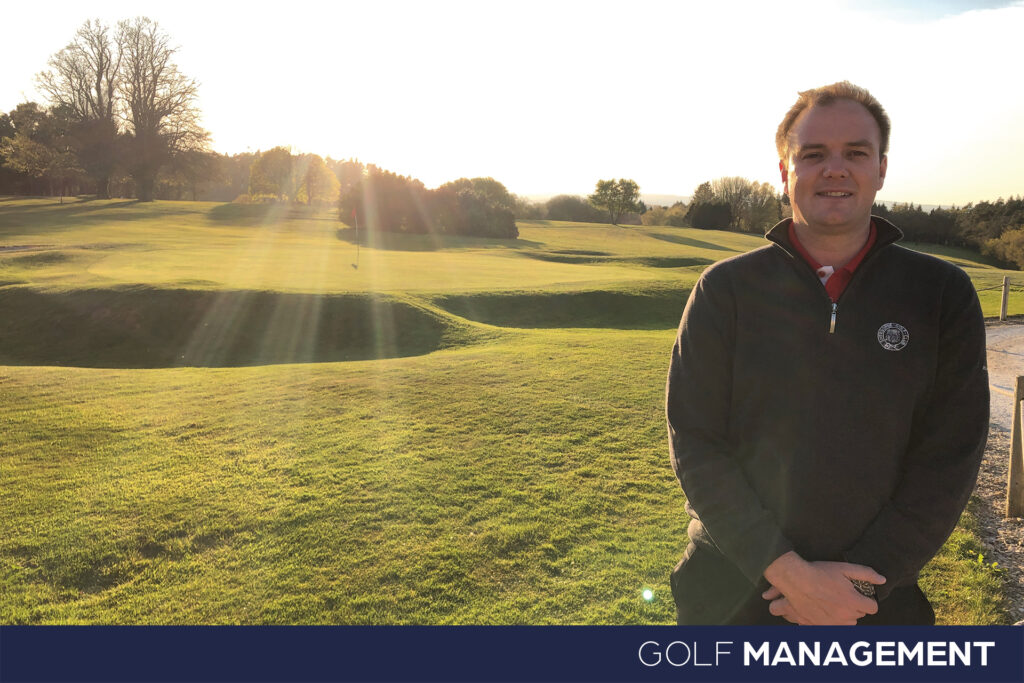

Picture the scene: it’s late April; early evening in West Dorset. The sun is still shining brightly on our outside table as we enjoy a cup of coffee and a chat while looking at the Quantock Hills in the distance.
It’s a glorious setting; a USP, in fact – but more of that later. The only pointer to things not being quite normal at Sherborne Golf Club is that general manager Alasdair Danson-Webster and I are drinking from paper cups – rather than the club china – in front of a temporary marquee located on what was, previously, part of the 10th tee. We couldn’t retire to the clubhouse even if we wished to, as it’s not yet allowed to open.
Such tableaux are, one assumes, replicated across the continent as golf clubs emerge from COVID lockdowns. But not everywhere can boast these vistas, or – in the UK at least – today’s temperature, the incongruity of which is confirmed by a significant drop during the following days and weeks. As the young people might say: we lucked out!
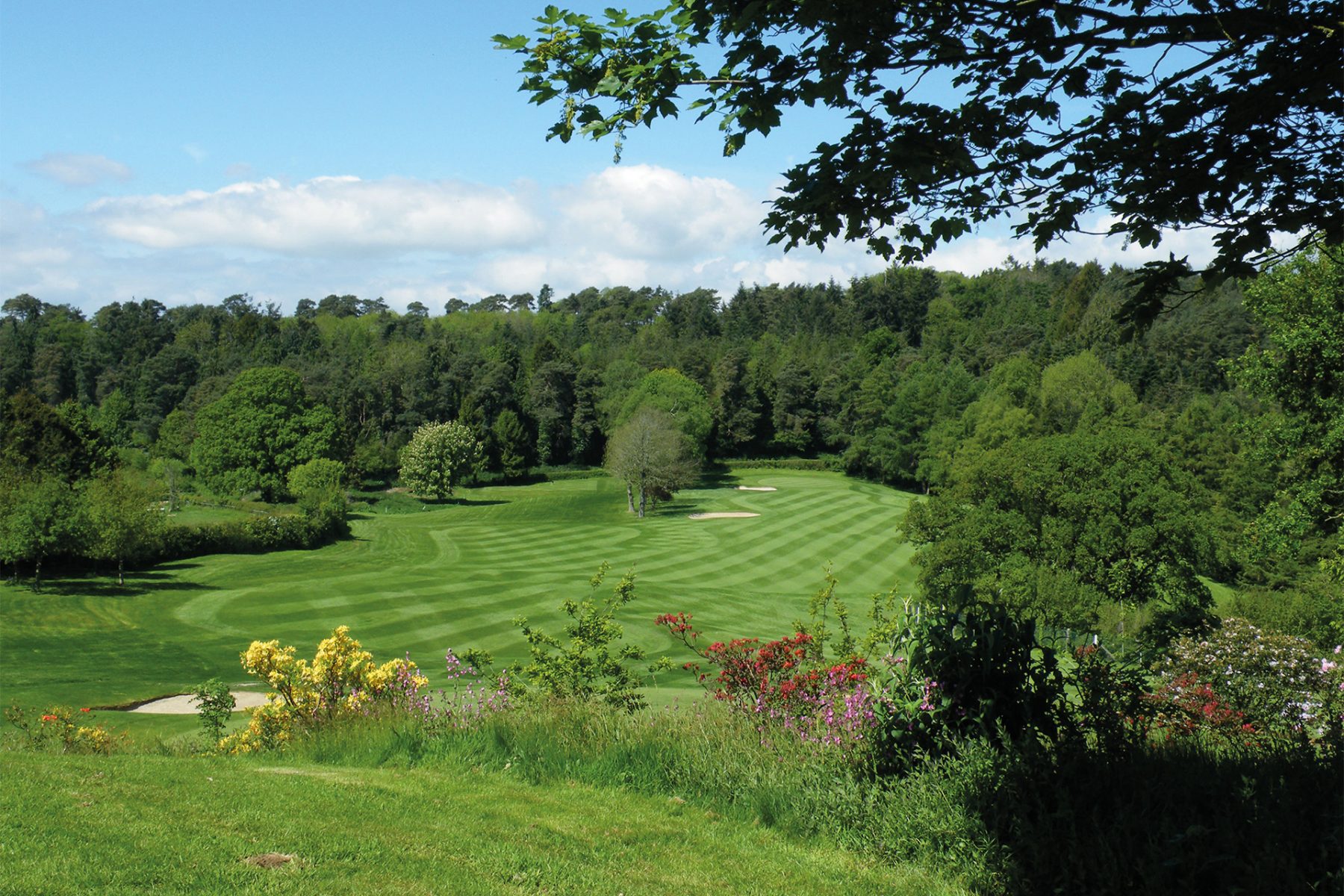
Regardless of temperature, the backdrop to the golf course remains the same: glorious Somerset countryside as far as the eye can see. So, for once, it negates the need for the normal query as to why somebody would return to the UK from the sunshine of the Middle East. But, ever vigilant, your correspondent goes there anyway.
For the amiable Danson-Webster, 35, these surroundings played a part, but not as much as the quest for the right work-life balance.
He explained: “My approach to work has certainly changed. I think it does when you have a young family. I have a three-year-old, and a soon to be five-year-old. When you’re younger, you look at your career pie chart and it’s split into two: it’s about job title and salary, whereas, now for me, it’s split into six. When you have a young family your priorities change greatly.
“It’s still job title and salary, but there’s also mental and physical wellbeing, time away, family, and enjoyment of what you do. For me, those are the key components, now. I felt the only way I could do that was to enter the private golf club world and continue to do what I enjoy.”
That may explain why he decided to return to the UK after ten years in the Middle East, but his subsequent route was not straightforward. He left his role as director of golf at the prestigious Jumeirah Golf Estates, in Dubai, in 2018, to move to Celtic Manor Resort, in Wales, where he took up the position of head of golf and retail.
However, while the job itself was fulfilling, he felt that, like U2, he still hadn’t found what he was looking for, and that he owed more to his young family. So, in early 2020, he walked away from the position. It was a brave step to take – and he could be forgiven for deciding it was, instead, foolhardy, as almost immediately, coronavirus landed on these shores and threw the golf industry (and much more besides) into turmoil.
He said: “Celtic Manor was a wonderful journey that was ended, sadly, after 12 months. I saw it becoming more and more like what I’d left in the Middle East, and I had come back to the UK craving for that work-life balance.
“I’d been proprietary based all my career, and, in that commercial world, it’s very driven. It takes its pound of flesh. Yes, it’s very rewarding, but as soon as the golf season stops, you’re pulled to all the other elements of the resort.
“The higher you climb in that organisation chain, the more corporate it becomes, and the more you move away from the shop floor and that day-to-day interaction with people.
“When I returned from the Middle East I wanted to get back on the ground, doing the things that brought me into this trade: building relationships with people, getting back to those roots, and I had always had a burning desire to move into the private golf club world.”
Searching for the ‘right’ role during a national lockdown was not easy, so, in the meantime, Danson-Webster and his wife, Karen, renovated a property they had bought as a rental project. It was a liberating and worthwhile experience, but what the University of Central Lancashire alumnus really longed for was that opportunity to work at a members’ golf club.
He added: “I felt I could bring some different skills or maybe a different approach to help a club make itself more sustainable – but it had to be a club that had potential and one that wanted to move with the times and embrace the changes in the golf industry.
“Sherborne presented itself as that to me, plus I bought into the people here. I had two other opportunities at the same time while I was interviewing here, but the process was a lot more professional, and it just felt right,” he added.
“The location is beautiful; we’re from the Fylde coast and I felt there were a lot of similarities in the countryside and surrounding areas, and, from what I understand, Dorset does get an awful lot of sunshine.
“Sherborne Golf Club is in a wonderful place. The vistas are quite special, a USP, one of our big selling points. Plus, from the course’s perspective it’s very good for drainage.
“We have a minor challenge with some shallow bedrock on the far side of the road on holes 1 to 11 which, on two greens in particular, doesn’t help, but, overall, our course drains a lot better than others in the area, which does mean, in the winter months, we are open when others are closed.”
As the industry emerges, butterfly like from the enforced chrysalis of COVID, it will face new challenges, not the least of which in the UK – whisper it quietly – are the effects of Brexit.
“We don’t know from an economy perspective where 2022 will take us, and what changes there will be. Could there be a financial recession? It’s an unknown, isn’t it?” pondered Danson-Webster.
“The key factor is for clubs to engage with the new members they gained during the pandemic, as well as those who have returned and to ensure we can retain them and maintain lower attrition rates, because the life-blood of a private club is your membership.
“We also need to make the memberships appeal to a younger generation, so we’re launching an in-house flex membership. It’s something the club has flirted with and trailed before, but, in May, we introduced our own Sherborne FLEX. With sole control of that, it just gives you a little bit more flexibility in how it’s managed.
“There will also be challenges maintaining participation and those new members. The lifeblood of a private golf club is the annual memberships, so the key factor is to engage with the new members gained during the pandemic, as well as retaining the existing members. These, combined, will help to maintain lower attrition rates.
“People will forget what you said, forget the words you use, but they’ll always remember how you made them feel, and that’s vital. If people have a sense of belonging and if they feel it’s good value, they will keep coming back.”
I, for one, will return, even if only for the views. And the company of Danson-Webster was enjoyable too. I have a feeling he might just be the perfect fit here.