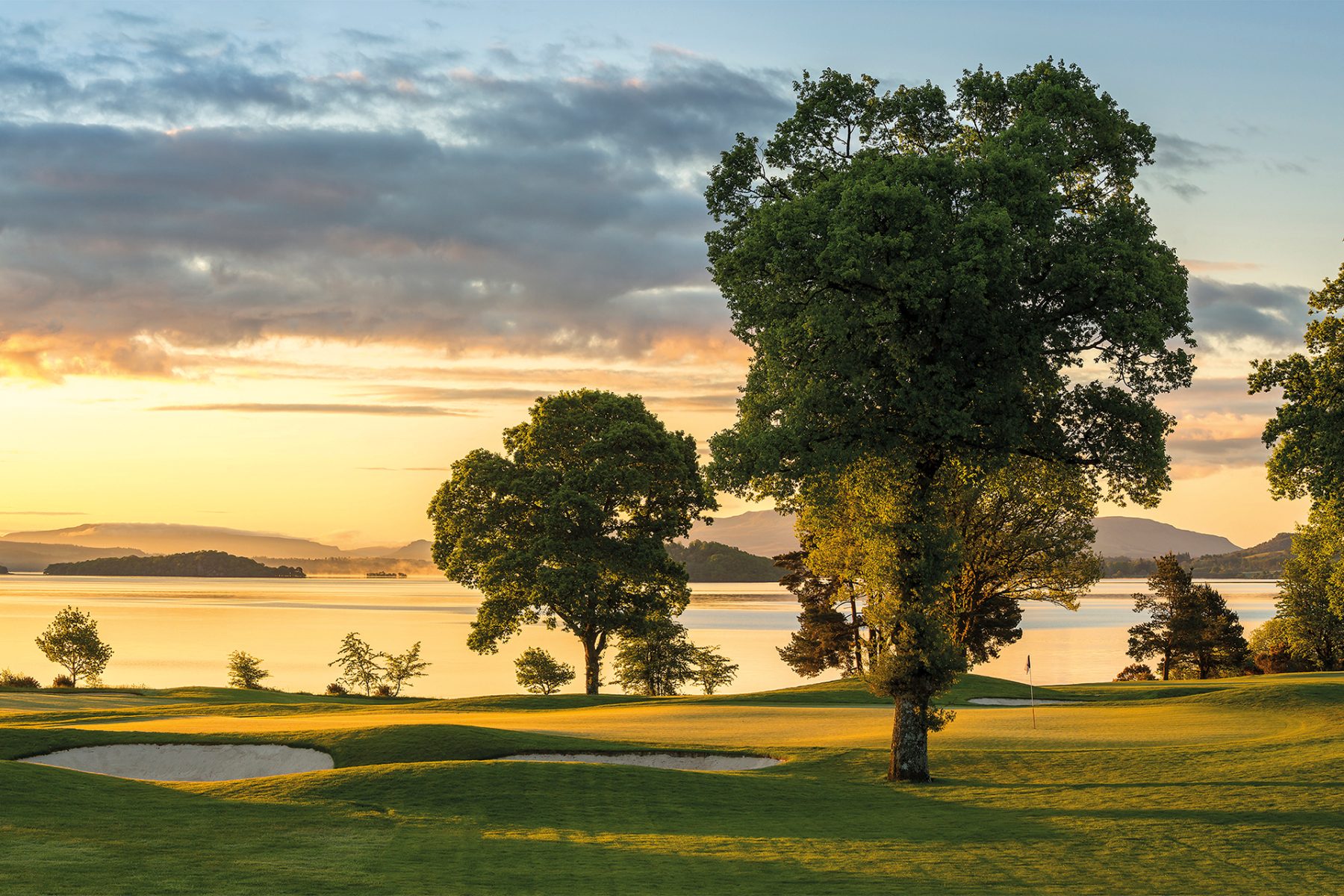
Set in over 600 acres of spectacular Scottish countryside, Loch Lomond Golf Club is one of the world’s foremost private golf clubs and arguably, also one of the most exclusive too.
Steeped in history, the site at Loch Lomond dates to Mary Queen of Scots who is alleged to have written love letters in Rossdhu Castle, the remnants of which overlook the 18th green. Rossdhu House, which was built in 1773, is now the clubhouse for the 600 members privileged enough to call Loch Lomond ‘home’.
The Tom Weiskopf-designed course was opened for play in 1993, with Weiskopf often referring to his creation on the shores of Loch Lomond as his “lasting memorial to golf.”
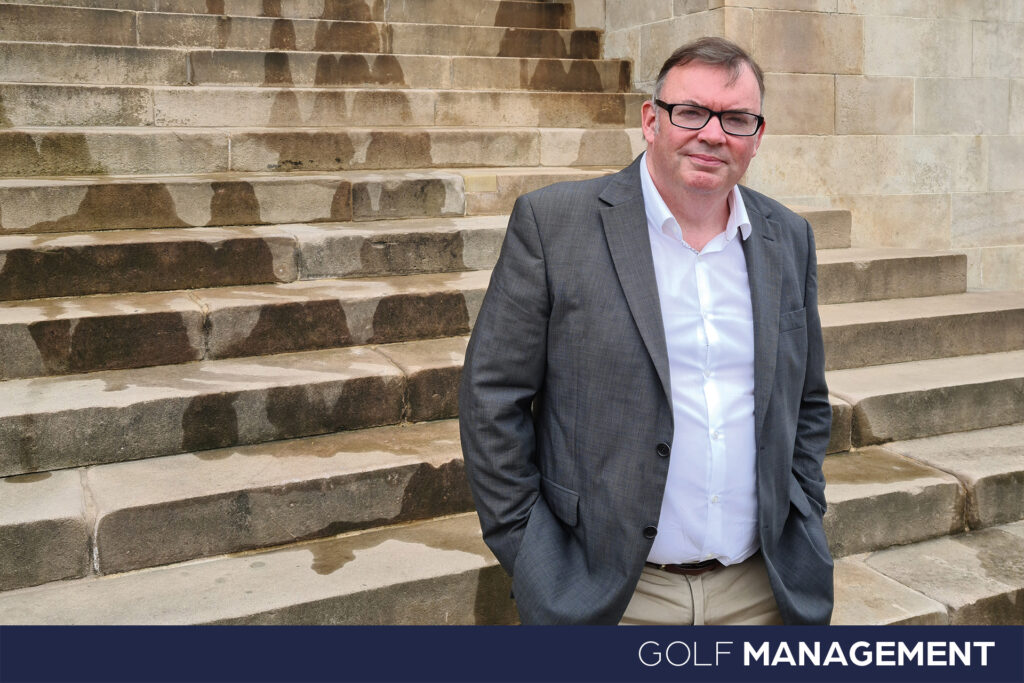
Every attention to detail is meticulously catered-for, so when the club – under the stewardship of general manager, Bill Donald – decided in 2017 to invest £7.5 million on improving the course, some could have been forgiven for questioning where the money could be spent.
But it was Donald’s previous experience at Lough Erne in Enniskillen, Ireland, that convinced him, together with his course superintendent, David Cole, that the course needed some urgent remedial work.
“It was quite a strange thing,” admits Donald. “People were joining the club, but the course was deteriorating quite rapidly. We had particularly poor weather in 2017, and the course started to hold water which wouldn’t disperse. We were also beginning to close, so it wasn’t a good experience.
“It was clear talking to David and looking at the course, that in order to move the club forward we were going to have to invest heavily in the sand capping process. The course at Lough Erne was sand capped, and I knew through that process that [this] was probably the only answer, but it’s bloody expensive.
“Thankfully we were cash positive at the time, so we made a proposal to the board which they agreed to, and work was completed at the beginning of this season. All credit to David and [contractors] Sol Golf as it’s revolutionised the club.”
Part of the £7.5 million was raised from the sale of Dundonald Links – which Loch Lomond sold in 2019 for £4.5 million – and part, in thanks, to the shrewd management changes that Donald has implemented since being recruited for the role of GM in 2011.
Donald, 55, hails from Northern Ireland and his family who have a hospitality background, were quite keen for him to avoid following in their footsteps. “To Mum and Dad’s absolute delight, I did a teacher training course at the University of Greenwich and was offered a job at a college, lecturing leisure management,” he recalled fondly.
“I was a young guy in my mid-twenties when I met a marketing specialist who was earning an awful lot of money and who suggested marketing was something I should look at. I ended up studying for an MA in marketing management at the University of Westminster, while teaching.
“Completely out-of-the-blue, I got a phone call from a friend of mine saying that Clandeboye Golf Club, which I knew, very, very well, was looking for a general manager, and much to Mum and Dad’s absolute horror, I applied and was offered the job.
“I had to decide what I wanted to do and questioned if going back to Ireland was the right move. I had a flat in Buckinghamshire and played cricket every Saturday. I loved golf, but was more into cricket, football and rugby, but recall saying to myself at the time: ‘You know, I think there’s an opportunity… I think it’s a huge opportunity in golf management.’”
Much to the antipathy of his parents, Donald returned to his native Northern Ireland and set about transforming Clandeboye Golf Club which at the time, had lost its way and was losing money.
“They wanted to build a new clubhouse and they wanted to turn around their fortunes, so I started to look at how the club could present itself to the membership, so that [members] could use the club the way they wanted to.”
Restrictions such as dress codes were discarded, and barriers to entry were overcome and the club rapidly started to evolve. “It took a year before it started to change,” he recalls, “but the club started to become very, very popular, and that is how I got into golf.
“I took the view that you start with the membership because they’re the ones that have bought into the club. They’re the easy wins, the low-hanging fruit, so you’ve got to track them first.”
A spell at Lough Erne followed, where Donald was involved in pre-opening membership sales before an opportunity to join the K Club beckoned.
“Before I left Lough Erne the hotel hadn’t opened, and the golf course wasn’t quite complete. Jim Treacy, the owner, wanted me to stay but I couldn’t turn down the K Club. I just couldn’t.”
Donald spent four years at the iconic Ryder Cup venue between 2007-2011, and working as director of golf, sales and marketing bore the brunt of the financial crash with him recalling: “Ireland suffered, and the K Club suffered with it. It couldn’t realise its potential.”
But as the K Club faltered, Donald was set to fulfil his own potential when he was invited to apply for the vacant general manager’s position at Loch Lomond.
“I fancied the role, and although an iconic venue, it had had its issues so I thought it could be an interesting project. What I learned about Loch Lomond was that I felt that a lot of things maybe hadn’t been tried because it was restricted or constricted by the ethos [of the club], and I’d seen that before.
“The club had gone through tough times, and it wasn’t a preferred employer and people had been made redundant. It was really grim times.”
Donald joined Loch Lomond in March 2011, and at the time, the club had 350 members each paying £40,000 to join. Today, membership sits at 600 with a joining fee of £145,000 and annual dues of £7,000.
So, what does Donald put the transformation over the past decade down to?
“It’s the Loch Lomond experience – that’s why people join. That’s what they want,” he boasts. “The golf course is massively important, but they want service, they want quality. We’ve made it more of an experience, and that has turned the finances around.”
Dotted around the club’s estate are 53 rooms available for members, guests, and family use, with occupancy rates double what they used to be. “At times we’re hitting 90 per cent occupancy during the season, and we’ve built more rooms to try and accommodate [members]. So, you can see that the whole model was built on 800 members, but we only need 600.”
According to Donald, the club has a waiting list for membership in “double figures”, and in order to join, prospective new members need to be invited by the chairman.
And with future investment – including a new caddy shack and plans for a par three course – it’s evident that the board are keen to keep developing the club for the privileged few who can lay claim to being members at one of the world’s most private golf clubs.
Little wonder then, that Donald has no desire to leave the shores of Loch Lomond anytime soon. “I want to see it through,” he explains. “I’m sure some members will have their own views, but the membership on the whole and the board have been fantastically supportive.
“There are opportunities to move on, but I certainly haven’t applied for anything and I’m very happy where I am.”