
Founded in 1907, Milltown Golf Club south of Dublin is considered to have one of the finest club experiences in Ireland, and has invested heavily both on-and-off the course in recent years.
A major refurbishment of the clubhouse preceded the club’s centenary celebrations, and more recently, Mackenzie & Ebert were retained to oversee a major re-development of the course.
But it was in August 2006, when Milltown procured the services of James Burns as F&B manager, that the future of the Irish club – both pre and post COVID – began to evolve. With a degree in hospitality management, and with a passion for golf, Burns arrived as a fresh-faced 28-year-old after a previous spell working for hotel chain Ramada.
“When I took the job at Milltown as food and beverage manager, it was the best decision I ever made – I could still be rattling around hotels,” recollects Burns with a smile.
“Although I have a hospitality training background, I’m passionate about the service industry, and have been able to combine my passion for golf, and golf clubs. And with Milltown being one of the largest providers of a hospitality base in the club world here in Ireland, it was a great fit.”
And that “great fit” led to Burns assuming the position of general manager four years later, after Milltown agreed to support and fund his career progression.
“I always wanted to be a GM of a club, so education-wise, I needed to develop,” admits Burns. “When I was food and beverage manager, the club supported me through a certificate in club management, which was run by the IGCMA, the Irish club region.”
Still hungry for knowledge, in 2008 just after the financial crash, the board at Milltown agreed to finance an executive leadership programme at Cornell University in New York, at a time when other clubs were making staff redundant. “I was very fortunate,” recalled Burns.
And that investment paid dividends the following year when Burns was offered the role of general manager. “I was offered the role in 2009 when my boss decided to retire before his time. I was 30 years old, and never thought I would be managing a club the size and stature of Milltown until my mid-to-late forties.
“The club were invested in my continuous [career] development, so when they came to me and said ‘We would like you to take over; you’ve done all of this training and we think you’re ready,’ they immediately offered me the job. I didn’t even have to interview for it.”
Now aged 42, Burns took over as president of the Club Managers Association of Europe (CMAE) last year – and has been a Certified Club Manager since 2012 – but with COVID uppermost in most general manager’s thoughts at the moment, he has some useful insight to share on how the golf industry might look like when the ‘new normal’ starts to evolve, and in particular his specialist subject, F&B.
“For the foreseeable future, we are looking to our colleagues and friends in the US and in the Middle East where they are working on 30 per cent capacity, and staff wearing masks.
“We’re also looking at other places that are ahead of us that offer busy food operations and expect to offer a lot more Alfresco or outdoor dining whilst observing social distancing.
“We will be offering a takeaway premium experience for members to come in and to be able to spend money, and there will be coffee shops and barbecues.
“We are mapping out our schedule and diary for the club, in preparation for when things return to a little bit of normality from the summer onwards, although very much on a restricted basis.”
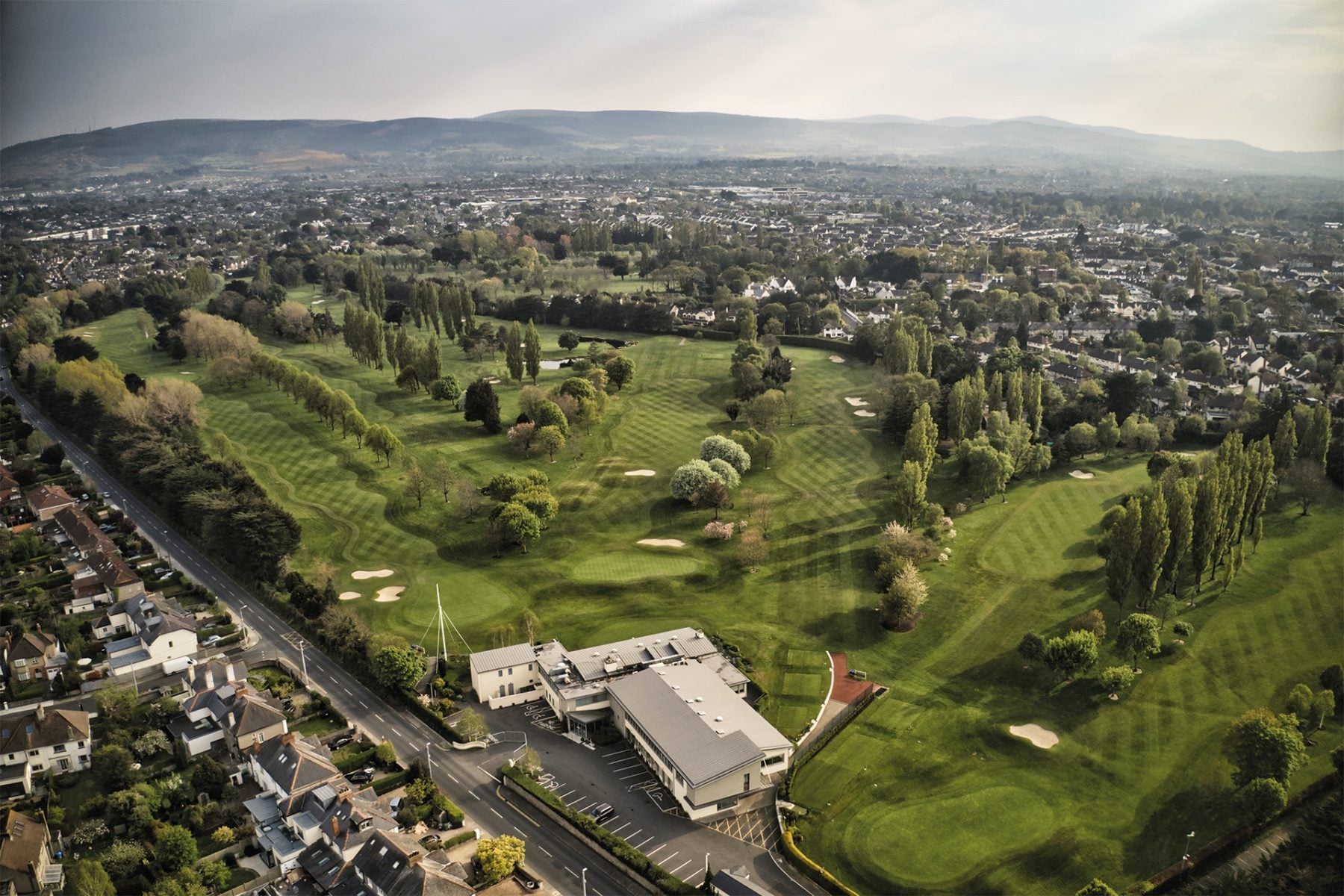
Burns plans to turn the club into a safe haven and is working closely with his social committee to protect the welfare of the membership. And due to the anticipated reduction in restaurant capacity, is looking at ways in which he can mitigate any financial loss.
“What we can do is look at running an event twice – we need to think separately now, and maybe drive in more lunch business, and more dinner business.”
But with the average age of the membership at Milltown in the early 60s, will that present a problem convincing them that the club is safe to visit?
“We’re not expecting people of that age category to be hugely active… why would they risk it? But I think certainly that what we’re learning from our American colleagues is that if we can provide a comfortable, clean, regularly sanitised, safe environment for members, actually members clubs are going to do quite well coming out of this.
“I also believe that the randomness of going to your favourite restaurant is going to go,” predicts Burns. “I’m three miles from Dublin city centre, so I’m competing with all the restaurants. And a mile from here are some of the top restaurants in the country.
“We feel – and certainly I would share what America is saying – that the club can provide a bit of a safe hub going forward. And we would see that as a potential area of growth for us, that members would come and use the club more often.
“I think that’s what the US model is looking at. They are seeing more activity from members and I think we’ll see more of our members too.”
As president of the CMAE, Burns had always intended to offer advice and guidance to his membership throughout his two-year tenure. Working with club managers from all sports, Burns shares a camaraderie with his fellow managers at golf clubs across Europe, many of whom are now facing an uncertain future as a result of COVID.
And with club managers needing to adapt at a pace unprecedented in the golf industry, he sympathises with their predicament.
“I know from a food and beverage background, that managers will need to be more creative in their offering, whilst obviously being safe. But trying to do what you did before isn’t going to attract people in.
“They probably need to be a bit more careful on trying to be all things to all members; all visitors; all guests. I think there will be a lot that needs to go into planning, and menus will also need to change.
“Managers will need to be more creative, and probably offer digital ordering via a smartphone app.
“I also anticipate that labour costs are going to be higher as well, because it’s really going to be a table service. You won’t be able to go to the bar to pay for your food or to casually walk out. We are going to be working in a more controlled environment. So, I think all clubs need to make sure that what they’re offering isn’t trying to stretch it out.
“It’s going to be tough for those proprietary clubs that rely on visitor or walk-in income,” admits Burns. “I think clubs need to think [towards] next year, and possibly recessionary times. Nobody has a crystal ball, but I think managers need to start building scenarios based on restricted numbers of food and beverage, and tailor their resources around that.
“I know people would like to probably go back to simple golf and a breakfast, and that’s probably the easiest thing to deliver, but I’m not sure that will be sustainable.
“It may get us through the crisis, but you have to be able to come back from it as well.”