A startling one in three people born in the UK this year will develop dementia in their lifetime. Yet only a third of people know they can do something to reduce their risk of dementia, by taking care of their brain health.
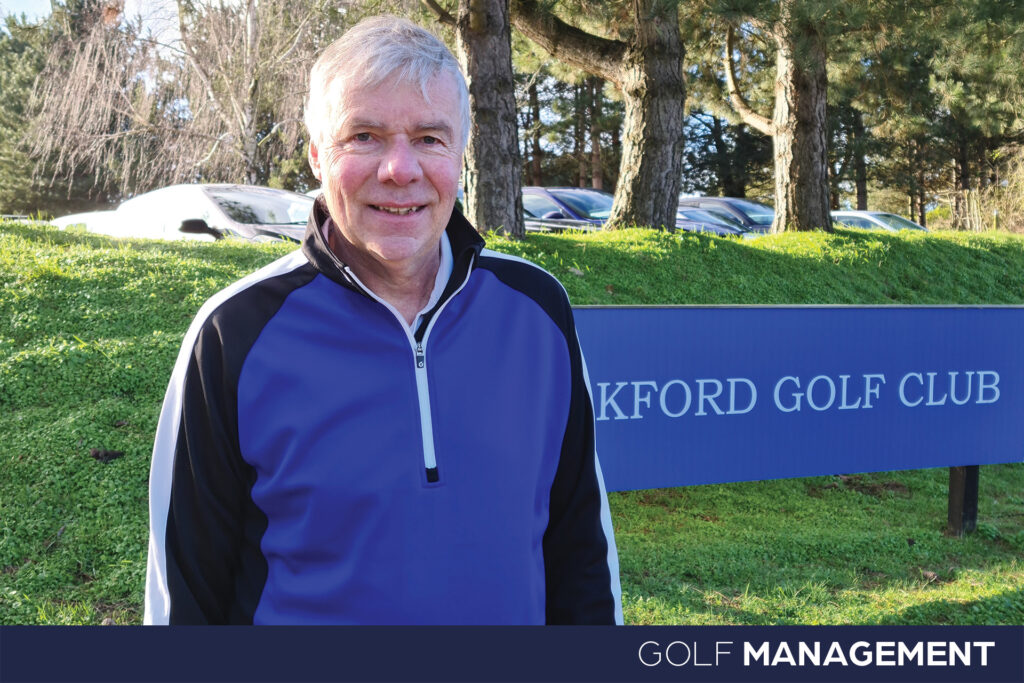
Those distressing figures, from Alzheimer’s Research UK, should strike fear into us all. Few of us, if any, will go through life untouched by the effects of dementia. My mother suffered from dementia before her death in 2016, and the experience of Ipswich-based PGA professional – and Suffolk PGA secretary – Tony Pennock, who has seen both parents fall victim, has driven him to try to reduce the effects through golf.
He’s not alone in this. In the north of England, Anthony Blackburn’s Golf in Society has been using the benefits of golf to relieve the symptoms. But Blackburn is not a golf professional, and doesn’t teach or coach, so Pennock – a fully qualified Class A-T (Advanced) PGA pro for more than 40 years – is now looking to take the concept a bit further.
He’s started by holding monthly sessions at Seckford Golf Club, in Suffolk, where he was the first PGA pro in the early 90s and is now general manager.
He explained: “Anthony’s pretty much the only other person doing this sort of thing. But he’s not a golf professional. His background is in care, I believe, but he does run it alongside golf clubs, and he’s got about eight or nine clubs up north he’s working with. But no other PGA pro is involved like I am and I do run it for free.”
Pennock first witnessed the effect social gatherings could have on dementia patients at his local football club, Ipswich Town, which held monthly Dementia Café sessions, at which he volunteered.
He said: “I take the putting board down with me. The whole essence of it is that you’re trying to give these people a little bit of quality of life and also to give the carer a little bit of a break. That’s what it’s geared to do.
“At the first café I was amazed at the reaction to the players who visited and the ability of football to stir memories, and wondered if I could do the same with golf. You’ve got a captive audience, potential dementia people in every single golf club.
“In discussion with Wendy Chard, from care specialist Home Instead, we decided to try to get them out on a golf course. So, really, without really too much more thought than that, we said, ‘let’s do it, straight away’.”
But it wasn’t quite as simple as transferring the processes in operation at the football club to a golf club. Not least the health and safety requirements.
“There are different aspects at the golf club,” he said, “though we still have tea and cake available the whole time. When it’s really cold, we have a little putting mat in here, we have other games to play too. But the biggest day, the first one we had, we went out to the course.
“At that stage, it was for people who have played previously. But now, it’s expanded already so anyone can come, because we can show them how to play, we can let them just hit a few balls on the range, just have a putt, even just have a walk around. The golf course is the perfect place for this.
“The whole fresh air, movement, all those different things. When you see it in action it’s quite something.”
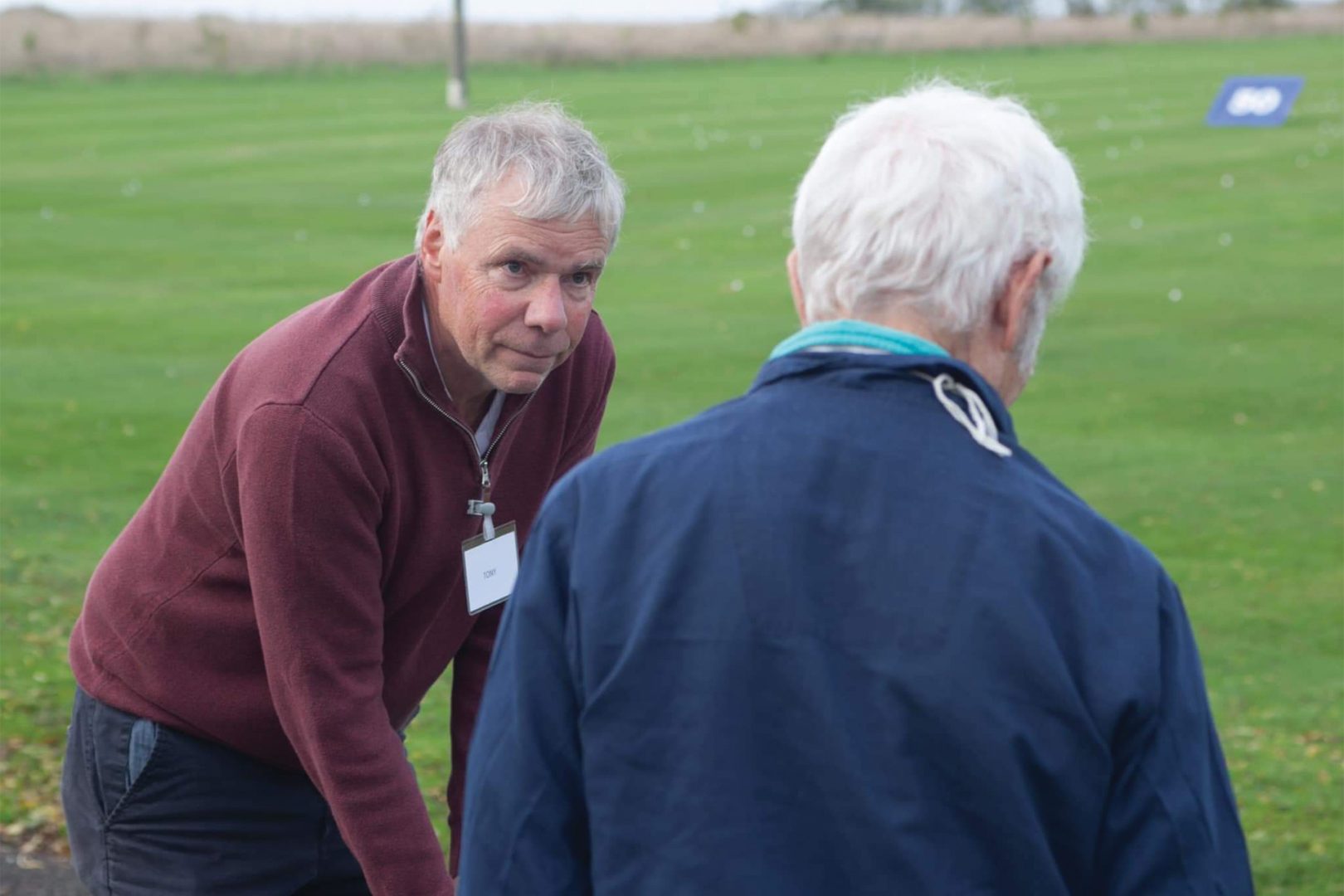
Pennock, whose mother has had dementia for 11 years and whose father has been in a home for the last two years, recalled one inspirational participant attending for the first time.
He said: “Lyall, a Scot, is standing there and he’s in his 80s. He said to his carer, ‘Oh yeah, I used to play’. His first shot was like a 140-yard seven on a high draw. He hasn’t played for ten years, because of his dementia. But instantly, he wanted to hit another one.
“Turns out he was born opposite the first tee at Carnoustie. We started talking to him about it, and he was like ‘I can remember watching one day and Ben Hogan was playing…’ It was just amazing.
“His carer admitted ‘I haven’t seen him like this for years. He’s given him a new life. He’s forgotten he can’t walk’. It’s unbelievable. It’s like this has given these people an opportunity to forget they’re basically housebound – it’s the most enlightening thing I’ve ever done.
“And it just keeps snowballing. I’ve had calls from all over the country.
“With early signs of dementia, you don’t feel that you have it. You don’t recognise it or at least want to. One of the guys here at Seckford, he wouldn’t come initially. Once he did come, I can’t get him away. He loves it.
“He’s not under any pressure. We’ve got two or three of them now come, with one more to come in. But they vanished from the club because they felt embarrassed to come. That’s no longer the case.”
The most people Pennock has had at an event thus far is 20: ten participants and their carers. But its popularity – and success – points towards more joining and a need for further sessions, as, currently, it’s just on the first Wednesday of the month.
That also means the potential for expansion, a scenario familiar to Pennock, who is not shy to share a good idea. Indeed, he was the man who created the Points4Golf membership system, which has been used and adapted widely since.
He continued: “I’ll try to expand it out to the rest of the golf clubs in the county for a start. The whole essence of the bigger picture is to develop almost like a franchise, I suppose. I haven’t had anyone directly from the PGA come to me and go, ‘This is brilliant’,” he said.
“No other PGA pro has done this, but I hope they will. However, ultimately, I’ve still got to put together the actual template for how it works. There is potential support out there from the dementia charities too.”
Naturally, when presented with this concept most golf clubs would ask about the commercial return. Again, as a GM, that’s not lost on Pennock, but he believes the effort can be recouped in terms of goodwill, personal satisfaction, and positive PR.
He said: “You don’t have to have a golf pro deliver it. You can do it with volunteers, but then you’ve got to train the volunteers. Also, you have to be DBS checked.
“You’ve got to do it properly if you’re going to do it, have everything in place. If I’m going to drive someone in a buggy, then we need to know the implications of driving it across the road… it’s complicated.
“But everybody involved has a warm feeling when they experience the difference they’re making to these people. It’s like seeing somebody come alive again. Who wouldn’t want to get involved in this?”
While the project has been a personal quest for Pennock – “It’s for my mum and dad really. It’s all about dementia awareness” – it has also benefited Seckford, and not just because it’s helped earn the club an EGU nomination for ‘golf club of the year’.
“It has been a real journey with Seckford and, realistically, the whole business, the whole golf club, has come around to the positives. It’s a very small golf club and has been really supportive. But the club’s had a lot of good press off the back of it. We’re ahead of the game.
“It’s fabulous to see the positivity around the golf club, but it’s mostly for the good of the people with dementia. Honestly, to see them smile … it’s the quality of life they don’t have, this gives them a little bit of quality and it livens them up.”