
Italy is famous for many things including the Renaissance and the incredible artists it has produced. The country is also famous for its culinary expertise, its art, cities and unique scenery.
Italy is also known for its language, its opera, its fashion and its luxury brands. And let us not forget its pizza and its football teams.
So perhaps it’s little surprise then that when it comes to golf, Italy has never really featured all that highly on the list of must visit destinations at least, not from a golfing perspective anyway.
With the Ryder Cup set to take place at Marco Simone Golf & Country Club near Rome in less than a year, Italy has set down a serious marker when it comes to selling itself as a serious golfing destination.
But for now, it remains an emerging market, although the country is becoming very popular for golfing breaks as the mild climate makes play possible all year round.
It’s also easily accessible from most European destinations to boot, which brings us nicely to Acaya Golf Resort & Spa, which is situated close to Leece on the south-eastern Italian Peninsula overlooking the Adriatic Sea.
Nicknamed ‘lo Stivale’, which is Italian for ‘the boot’, Lecce is a city in Italy’s southern Apulia region, best known for its baroque buildings.
Currently ranked 28th in the Top 100 golf courses of Italy is Acaya Golf Resort & Spa. Construction on the David Mezzacane creation – who coincidentally, was also responsible for the original layout at Marco Simone – began in 1996, and finally opened for play four years later in 2000. The original layout was described as a simple and traditional design, that was functional, and accessible to everyone.
After being purchased by American owners, architects Michael Hurdzan and Dana Fry were asked to remodel the layout, which reopened for play in 2009, and which has so far, stood the test of time.
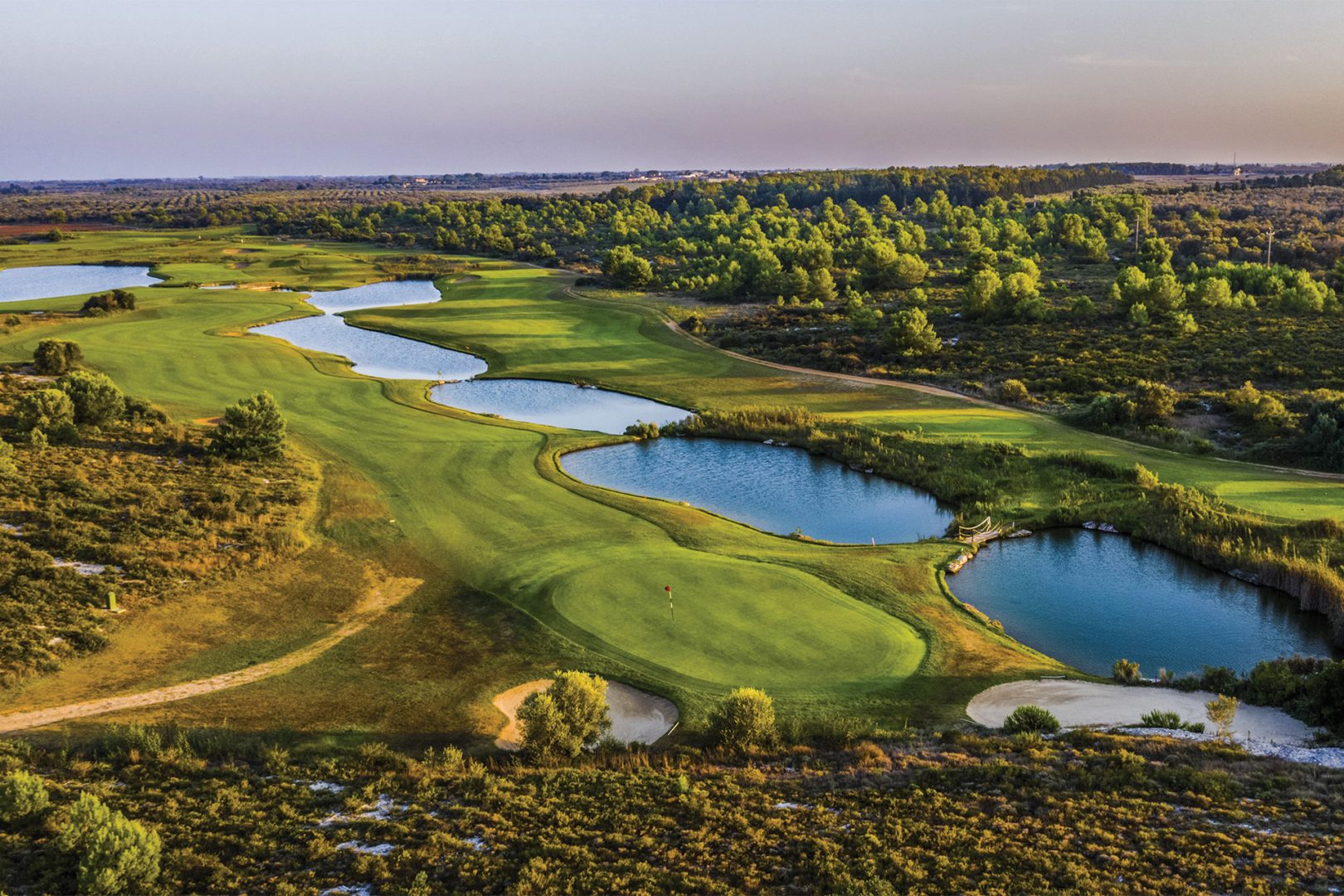
Hurdzan and Fry were able to redesign an 18-hole, par 71 course measuring 6,192 metres, in harmony with the surrounding natural resources. Using a variety of terrain that meanders through an area of rare natural beauty surrounded by green Mediterranean vegetation, the course encourages players to use every club in the bag.
The grass on the fairways is a strong and compact American Bermuda variety, which provides an excellent surface to ensure a consistently clean and sharp shot.
Four types of fescue grasses were allowed to grow to their natural height bordering the fairways, while two types of agrostis stolonifera palustris – A4 and A1 – were used for the greens: a composition which has about twice the stem density as common Penncross.
A complex system of lakes and streams results in water featuring prominently on the course, which is now a stern test of ability even for mid-handicappers.
On the front nine, three holes including the par four, sixth – the hardest hole on the course – all feature water, and if that’s not challenging enough, the Mediterranean rough Scrub can be penal to the point of brutal. Go offline, and you’ll be dropping from the fairway.
On the home stretch, five holes feature the wet stuff (10, 11, 12, 14 and 18) all of which meander around lakes overlooking the rolling countryside. Only the tenth hole needs a carry over water, yet Acaya feels as if water is more in play then the layout often suggests.
Tight fairways and the aforementioned Mediterranean scrub certainly focus the mind on the tee, where perhaps keeping the driver in the bag is the most sensible option.
The design is ecologically sustainable, which is particularly interesting since Acaya Golf Resort & Spa is close to a natural oasis of around 380 hectares, offering rare natural landscapes and a refuge to numerous waterflows.
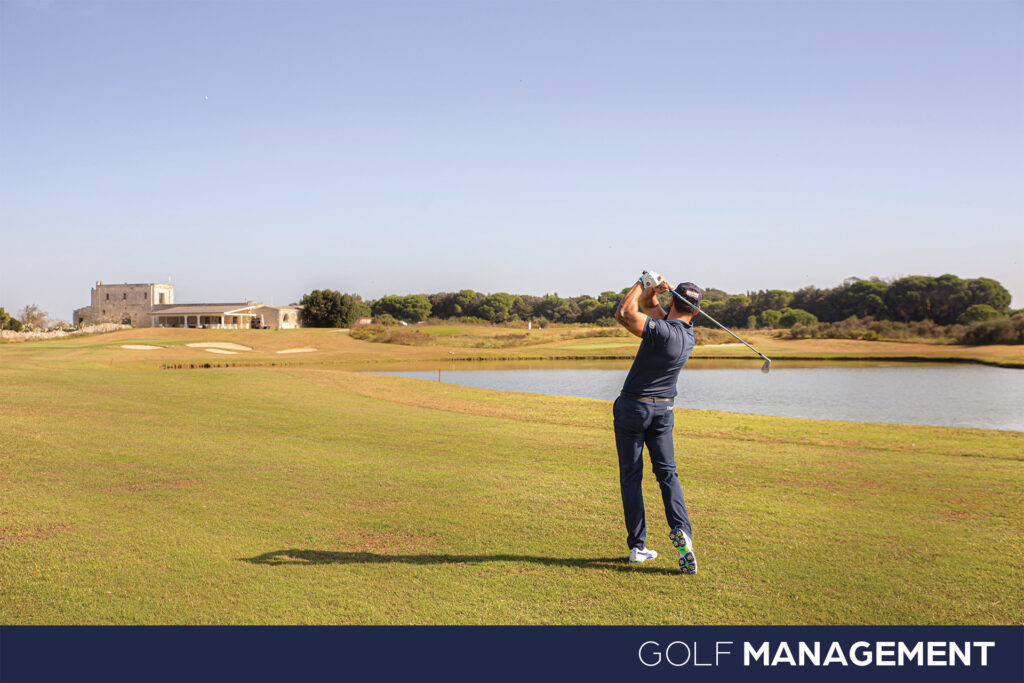
Apres golf, a centuries-old farmhouse has been repurposed as the clubhouse, which is immersed in the greenery of the golf course and overlooks the Cesine WWF Nature Reserve.
The restaurant inside the clubhouse offers simple yet high quality cuisine inspired by the local culinary tradition, and is a little piece of paradise, where guests can indulge all their senses and enjoy the natural surroundings and scenery.
Now owned by Mira Hotels, Acaya Golf Resort & Spa is one of three golf resorts owned by the group which also include Riva Toscana nestled in the Tuscan Hills and Borgo Di Luce I Monasteri in Sicily.
An expanse of olive trees and Mediterranean maquis surrounds the elegant four-star resort that embraces the architectural traditions of the region, reminiscent of ancient monasteries within a charming Mediterranean setting.
Aside from golf, the resort features a 1,200m² spa with whirlpool, two outdoor swimming pools, a sauna and a Turkish Bath all ideal for relaxing after a challenging time out on the course. Set 1.9 miles from the Cesine Nature Reserve, the hotel is a just a five minutes’ drive from the Salento seaside which is a haven for sea lovers featuring its golden sand and transparent azure waters.
All told, Acaya Golf Resort & Spa has plenty to offer golfers, and non-golfers alike, and with Italy growing in stature as a golfing destination, is ideally placed to benefit from the uplift in tourism that the Ryder Cup will surely bring to Italy next year.